

Wild Mexican Gray Wolf Population Increases to 319 Wolves in Southwest
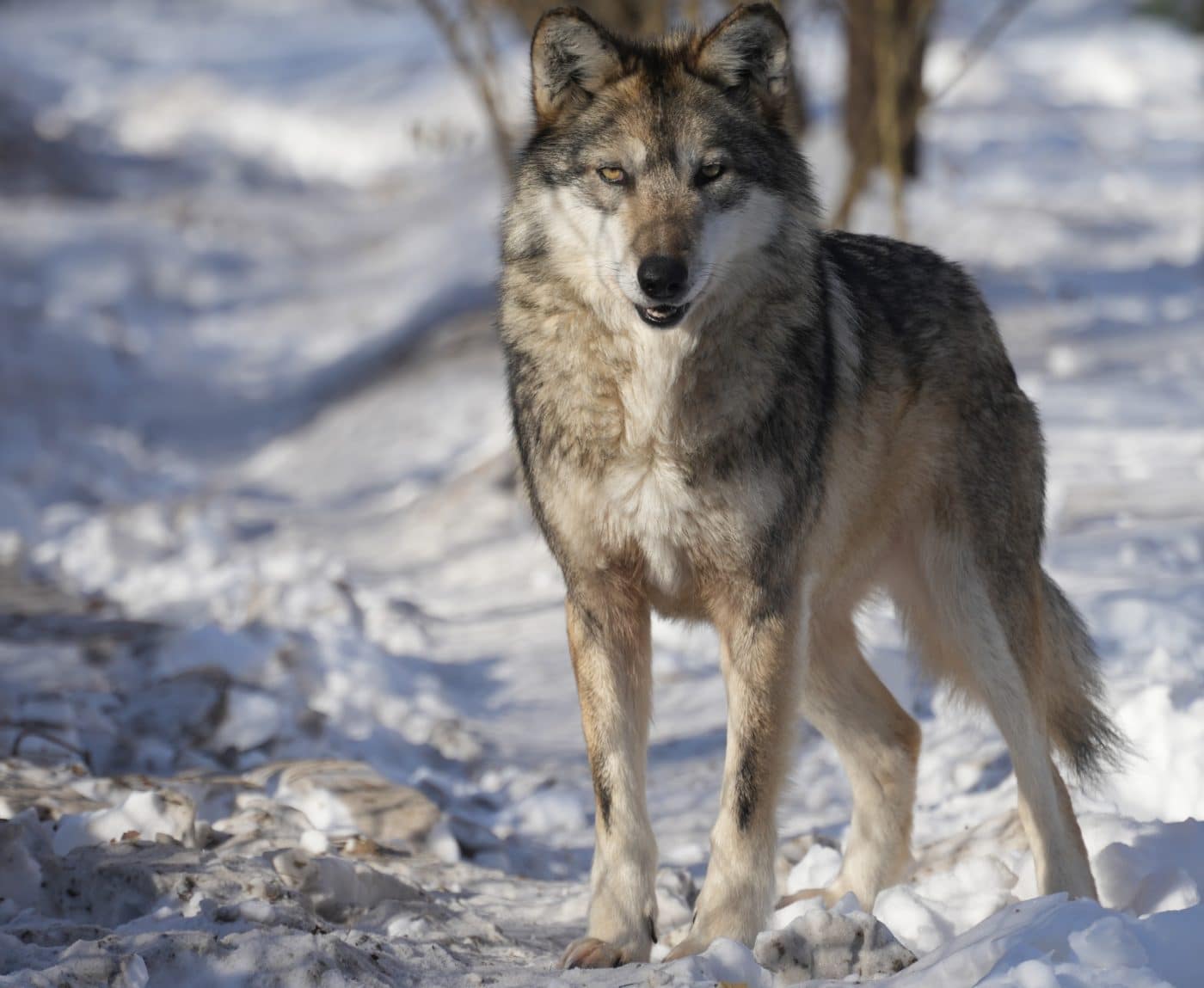
The Arizona Game and Fish Department and the New Mexico Game and Fish Department announced today that the number of Mexican gray wolves living across Arizona and New Mexico has increased from 286 in 2024 to 319 in 2025 (an increase of 33 wolves). There is an interesting “Catch 22” that comes along with this seemingly positive news that is associated with a problem with the current management protocols of the species.
Genetic Diversity Waning
As the Mexican gray wolf population grows in the wild, and efforts to introduce genetic diversity stagnate, it will become more challenging to improve the declining genetic diversity of the endangered species. In 2025, the mean kinship of the wild population, or measure of relatedness, was 0.2404; full siblings have a mean kinship of 0.25. The resumption of captive-to-wild releases of family groups, in addition to the pup fostering technique currently employed by the Mexican Wolf Interagency Field Team, would immediately bolster the genetics of the wild population.
Future Listing Status at Risk
As the Mexican wolf population continues to grow, it will soon reach an average of 320 wolves over a period of four years. This, according to the US Fish and Wildlife Service’s court-challenged 2022 recovery plan, would meet requirements for downlisting of the species from endangered to threatened.
The Mexican wolf will be considered for downlisting when:
a) The United States population average over a 4-year period is greater than or equal to 320 Mexican wolves; and
b) Gene diversity available from the captive population has been incorporated in the United States population through the scheduled releases of wolves surviving to breeding age as identified in delisting criteria. (22 captive-born pups surviving to two years of age after their releases) *current pup survival count is 21.
Downlisting of the species would allow for “greater management flexibility” – meaning that it will be easier for wildlife agencies and livestock producers to kill Mexican wolves. In fact, Arizona legislators are actively trying to push through legislation that would allow landowners to kill Mexican wolves on private and/or public lands, despite countless studies that prove killing wolves does not solve conflict. Nonlethal methods of coexistence (range riding, carcass removal, shifting calving locations, etc.) are proven to be more effective at preventing wolf-livestock-human conflict.
Rather than relying solely on numbers to determine species’ recovery, we must consider the genetic health of the population and whether the species still faces serious risk. Based on the declining genetic diversity and the increasing efforts to kill Mexican wolves, they are far from recovered.