

Wolf Conservation Center Study Finds Coastal Coyotes Preserve Red Wolf Ancestry Through Survival and Adaptation
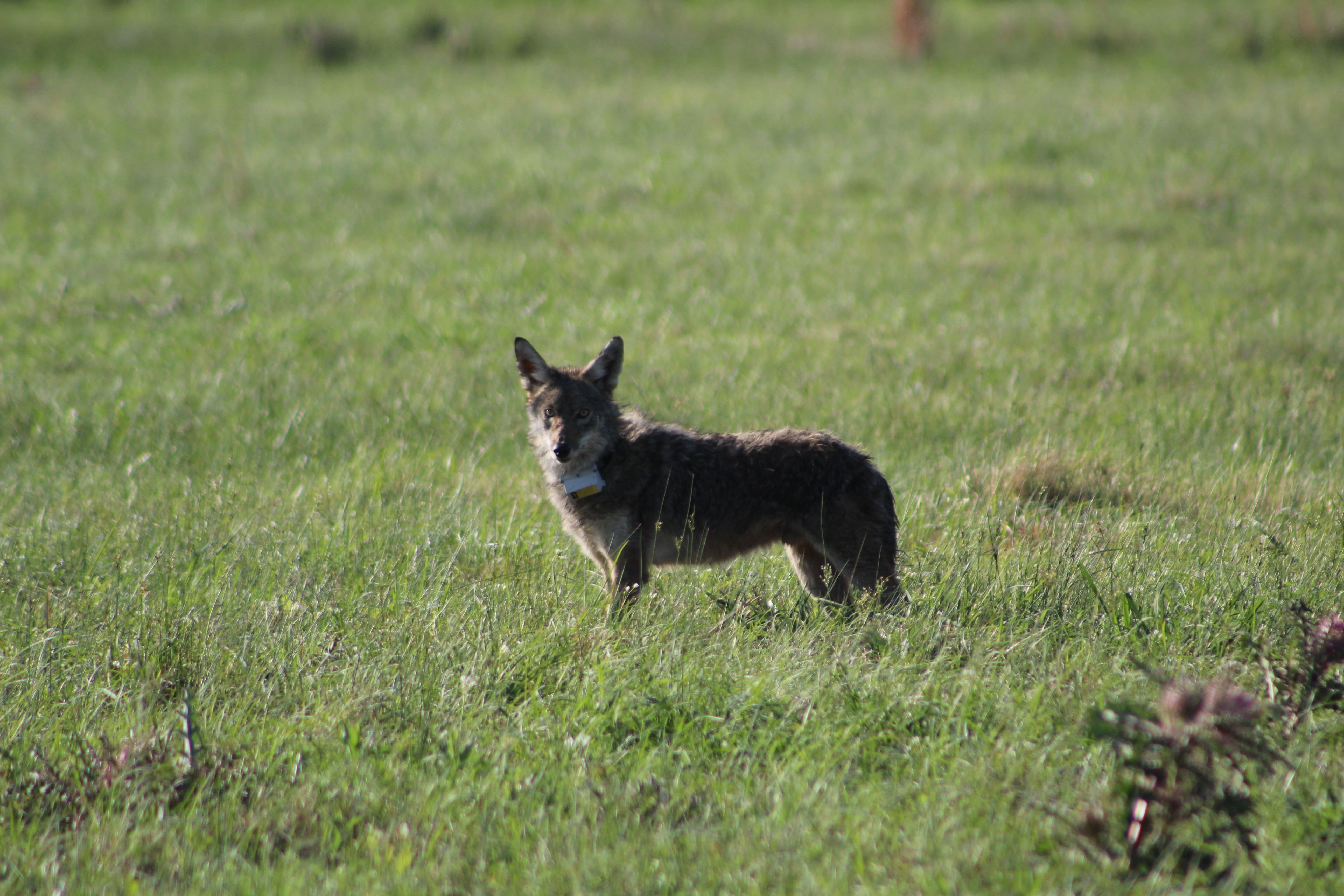
Distinct body form and high survival of coastal coyotes along the Texas-Louisiana border region allow coyotes harboring red wolf ancestry to persist decades after the red wolf’s extirpation from the region.
South Salem, NY — A new study led by the Wolf Conservation Center Integrative Ecology and Coexistence Lab and published in Ecosphere reveals how red wolf ancestry has persisted for more than four decades after the red wolf was declared extirpated from the wild. The research shows that a combination of distinctive physical traits adapted to coastal wetlands and high survival has allowed coyotes to harbor, maintain, and pass on red wolf genetics.
The study focused on hybrid-like coyotes referred to as “Gulf Coast canids,” living in coastal wetlands along the Gulf of Mexico that retained significant red wolf ancestry. Researchers found that these coastal coyotes form a stable, locally adapted wetland ecotype shaped by historical red wolf introgression and strong preference for wetland environments.
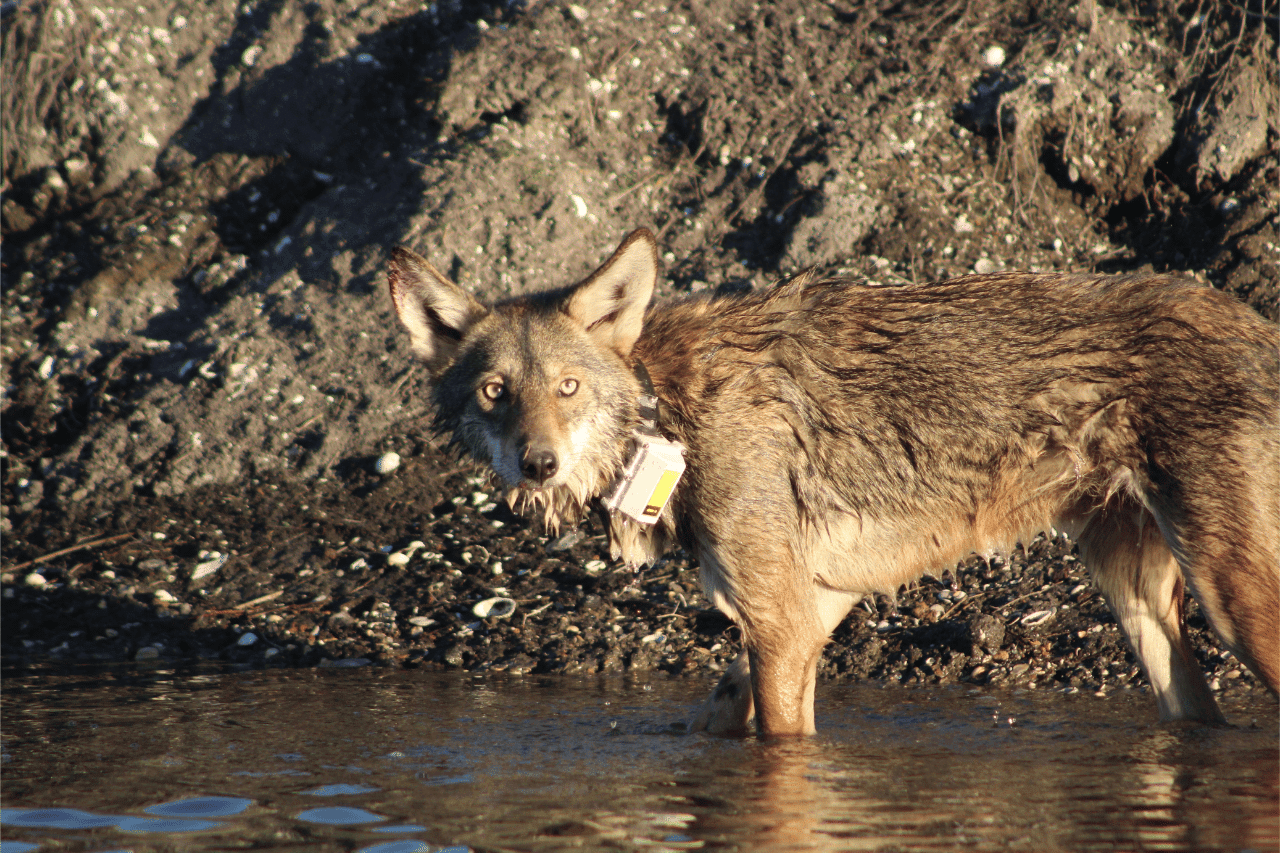
Morphological analyses revealed that Gulf Coast canids are tall, lanky coyotes with small coyote-like heads and large red wolf-like ears. These traits likely improve movement in unstable, muddy, and inundated terrains of coastal marshes and floodplains. The small heads of canids indicate that selection favored locomotion and mobility rather than killing ability.
Equally important, the study found that Gulf Coast canids experienced unusually high annual survival compared to most coyote populations elsewhere in North America. Coastal wetlands function as partial refuges from human activity such as hunting and lethal control, allowing Gulf Coast canids to survive long enough to disperse and fill breeding vacancies across extensive areas which facilities gene flow on the landscape. This elevated survival appears to be the key factor enabling red wolf ancestry to persist.
“Survival matters,” said Dr. Joseph Hinton, lead author and Senior Research Scientist for the Wolf Conservation Center. “When it’s a rising tide that lifts all boats, it facilitates safe movements across the landscape. That allows coyotes to move their admixed genetics into other areas along the coast. In this case, the coastal wetlands are functioning as a refuge not just for the coyotes but for the red wolf’s genetic legacy in the region. The morphology of the wetland ecotype reflects the demands on canids for persisting in those wetlands”.
The researchers suggest that Gulf Coast canids may function as a regional source population with dispersing individuals moving red wolf ancestry into adjacent areas inland while remaining morphologically and genetically distinct themselves.
The Wolf Conservation Center advances the recovery and conservation of wolves through science, education, and advocacy. This research provides new insights into how the red wolf’s legacy may persist within their historical range through important population processes and may be used to improve recovery of red wolf populations.
For more information about the Texas-Louisiana Gulf Coast Canid Project, visit here.
Learn more about WCC-IECL below.
For press inquiries or additional information about the study, please contact: media@nywolf.org.